By Cailin Reedy
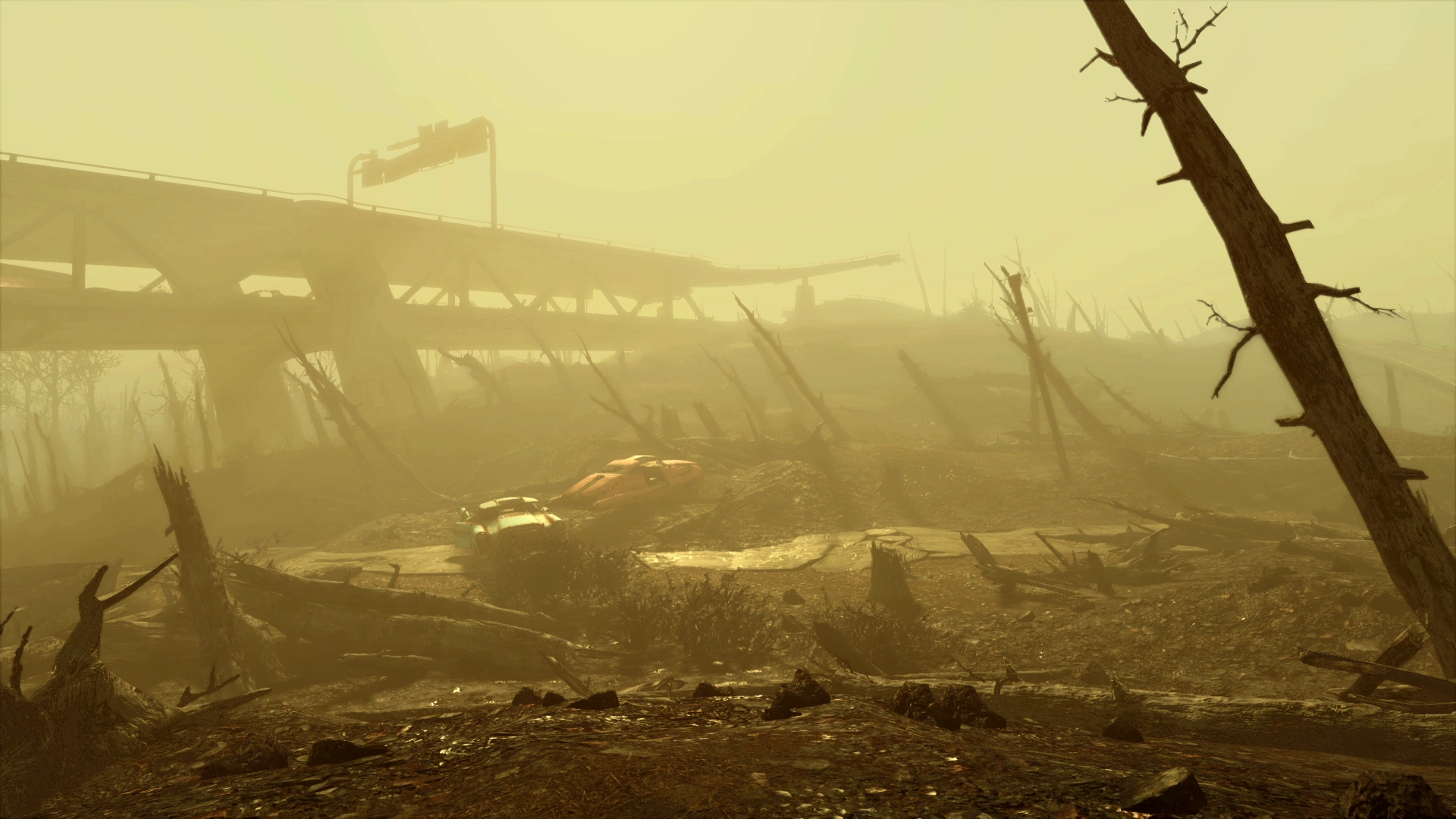 |
| The radioactive Wasteland outside of Boston in Bethesda's Fallout 4. |
As I’ve previously discussed, people tend to have a weird fascination
with the apocalypse as discussed in the media.
Unless it’s discussed in realistic terms, the apocalypse is just
something to be beaten, a chance for the heroes to come in guns blazing and
rescue the world from certain death. But
even when it is discussed seriously, the end of the world is often laughed off
as fiction.
In Bethesda’s "Fallout"
series, the apocalypse has already happened and players must navigate an
irradiated wasteland full of collapsed buildings and mutant creatures. But the pseudo-'60s mentality, eerily upbeat
and accepting of the end of the civilized world, is dissonant. The non-player characters live hard-scrabble
lives, fighting to survive each day in the Wasteland.
But one of the more disturbing insinuations has to do with
the science fiction treatment of nuclear warfare.
Of course, if a nuclear bomb on the levels of Little Boy or
Fat Man, the bombs dropped on Hiroshima and Nagasaki during World War Two, were
to be dropped on almost any part of America, the blast radius and subsequent
nuclear fallout in the area would be devastating. Predictions of how a nuclear blast would play
out can be made with the NUKEMAP
tool created by Alex Wellerstein.
NUKEMAP allows a user to input data, such as nuclear bomb yield and
point of impact, in order to generate potential casualties, radioactive
fallout, and nuclear drift due to air and water currents.
However, video games such as "Fallout" give players the wrong idea about nuclear energy. While it can be used to make bombs of
devastating effect, nuclear energy can also be used as a clean, non-invasive
way to power cities without further polluting the environment. It is both potentially helpful and harmful,
but video games such as "Fallout" hit
upon only the harmful side of it—a radioactive future wasteland where radiation
kills and mutates.

No comments:
Post a Comment