Monday, February 29, 2016

Beyond Fury Road: The Dystopia of Mad Max


 By Cailin Reedy


America loves dystopias. In movies such as "The Hunger Games," "Wall-E," and "This Is The End," the apocalypse takes over. Media consumers have developed a love affair with the savage terror - and beauty - of the apocalypse and its fallout to the point that barren dystopian landscapes are almost a goal.

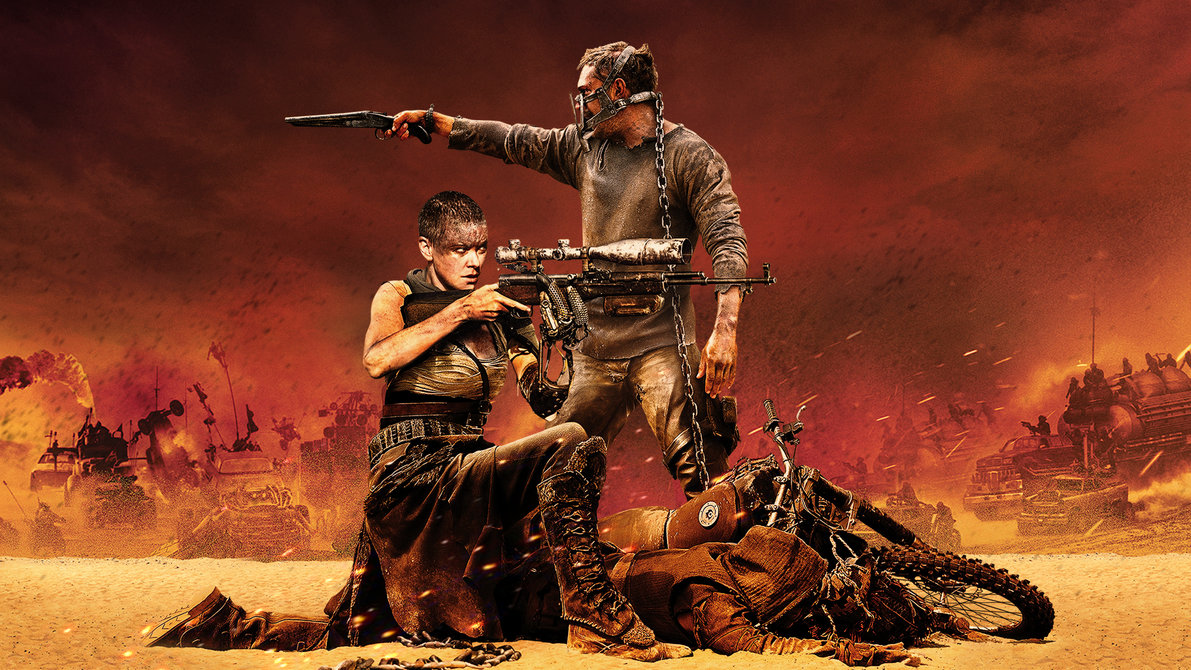
One of the most recent examples of the media’s love for the apocalypse is 2015’s "Mad Max: Fury Road." The movie continues the original franchise that starred Mel Gibson as a post-apocalyptic wasteland wanderer called Max, a “road warrior” in a world where society fights tooth and nail for the last drops of gasoline.

But this future, where the earth was destroyed by nuclear warfare and turned into a desert, isn’t frightening. It isn’t a horror movie about the evils of environmental devastation. Until "Fury Road," the Mad Max franchise wasn’t even particularly focused on social justice or ethics.

The apocalypse is romanticized. It may be stark and violent, set in the real-world Namibian desert, but the characters in the movie are of almost superhuman drive, intelligence and strength. The apocalypse is not a scary place. It is almost a goal, a place where anything could happen. The apocalypse is a new beginning.

While the standard apocalyptic vision of Earth recovering after catastrophe may be appealing as a “rebirth” motif, Mad Max has no greenery. It is a barren landscape with little chance of recovery, and the people in it continue to pollute the environment and destroy natural spaces without heed. And the inhabitants of this universe suffer almost no consequences from this, other than having to live in and deal with the environment. But even that is a given because they cannot remember a living Earth.

Movies like this are fun, but they are also dangerous. They teach that the environment is static, that once it is wounded there is no chance of recovery. They teach its importance, to an extent.

But they also teach that the death of Earth is only aesthetic. As long as the desert landscape is pleasing to the eye - and it, in all its computer-enhanced beauty, is - then the apocalypse is nothing more than a change of backdrop and a little dust in one’s boots.

Tuesday, February 16, 2016

Step One: Punch A Tree

By Cailin Reedy


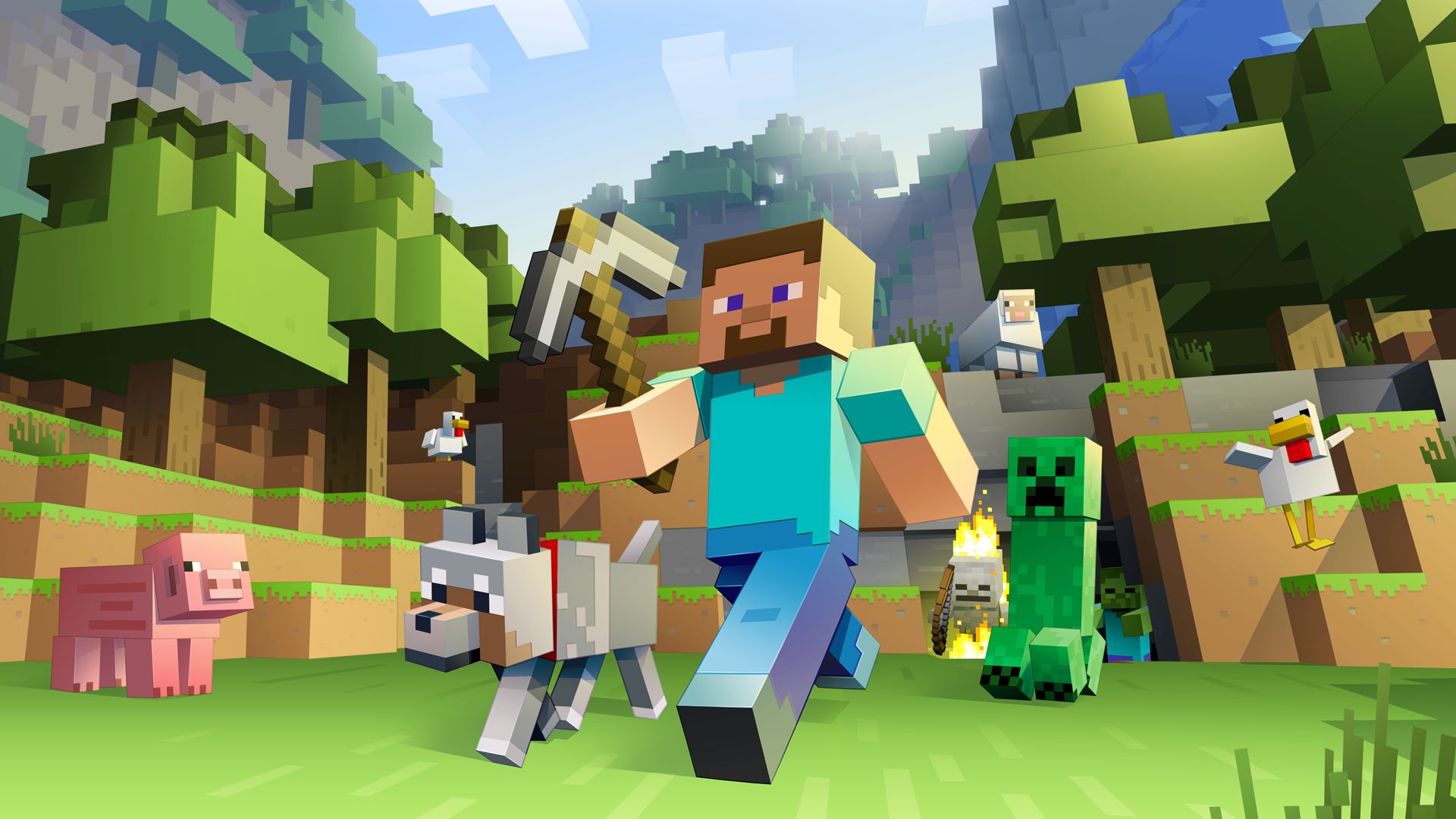
Video games aren't reality. Oftentimes, they don't even come close to reflecting realism, especially in the environment. Objects and animals, once harvested or killed, magically respawn after a set amount of time. Players are free to exploit and kill without restraint.

Minecraft, the popular block-based computer game, is a fine example. When a player starts a new game, the first thing he or she must do is gather wood. "Four trees' worth of wood," according to the Gamepedia Beginner's Guide to Minecraft.

This is a problem: the very first thing players must do in order to survive is to inflict deforestation, sometimes on a massive scale, on a pristine environment. Players are free to devastate the world in a multitude of ways: strip mining, mass deforestation, factory farming, and building enormous monuments. But that isn't all.

The consequences of burning forests, murdering animals, and building unnatural structures? Absolutely none. Tear down the structure, and the grass will grow over the barren dirt again. Plant some saplings and they will grow, given enough sunlight. If you have only two animals left, they can breed. If not, more will spawn.

Minecraft, though it allows for almost endless creativity, has a dark side. It teaches children that resources are infinite, that the difference between cutting down a tree and burning entire forests is negligible at most. More coal, gold and diamonds can be found a few miles away. When all the resources have been mined out of the current residence, it's time to move and exploit some other place.

It's this mentality that put our Earth into such peril. And it's this mentality that needs to be addressed, even in video games such as Minecraft.

Monday, February 1, 2016

Why I'm Doing What I'm Doing


The topic for this blog is how popular media, such as movies and video games, influences the way that we as a culture view the natural environment. I struggled a while when I was trying to come up with a suitable topic, but since the environment and popular media are both within my interests, I figured that both of them could come together and form something interesting. The overlap area isn’t something that’s often discussed, even though popular media shapes our perception of the world more than we can sometimes point out.
            Pop culture, especially pop media, is a way to discuss important ideas in a low-brow, safe environment. While some pop culture may become controversial if it’s too far out there or too offensive to the general audience, most of the ideas I hope to investigate are simple enough that the general audience doesn’t balk at them. The environment in movies and video games, after all, is just the background. If it enters into viewer consciousness at all, it’s because it’s pretty or ugly or useful to the characters or player in some way. Virtual environments aren’t especially critical to the public consciousness because they’re pretend.
            Movies like "The Hunger Games" or "Mad Max: Fury Road" raise few eyebrows with their post-apocalyptic landscapes or genetically-modified organisms, but both those movies rely on one thing: the end of the world and destruction of civilization, brought about by mankind.
            Video games such as "Minecraft" give players free reign over entire worlds, while games such as "Ark: Survival Evolved" put the player at the bottom of the food chain. In both of these games, the player is the only human in a vast, dangerous environment almost completely devoid of humanity or structures. "Fallout," especially the new "Fallout 4," is a game franchise built entirely around a fictional '60s-style universe, post-nuclear warfare that has destroyed and irradiated much of the United States.
            I want to dig deeper into these issues that pop media brings up, especially those ideas that sit quietly below the surface. Why is it that popular media, and thus human beings, are so interested in the destruction of the earth? It’s become inherently “cool” to have things set in post-apocalyptic wastelands. Why? And just why do wastelands serve more as jumping-off points rather than cautionary tales? Is it possible for these kinds of fictional futures, such as "Fallout" and "Mad Max," to serve as both a romping ground and a caution?
These are some of the questions I want to pursue through this blog. I hope to learn something new about the human condition and why we interact with virtual environments the way we do.