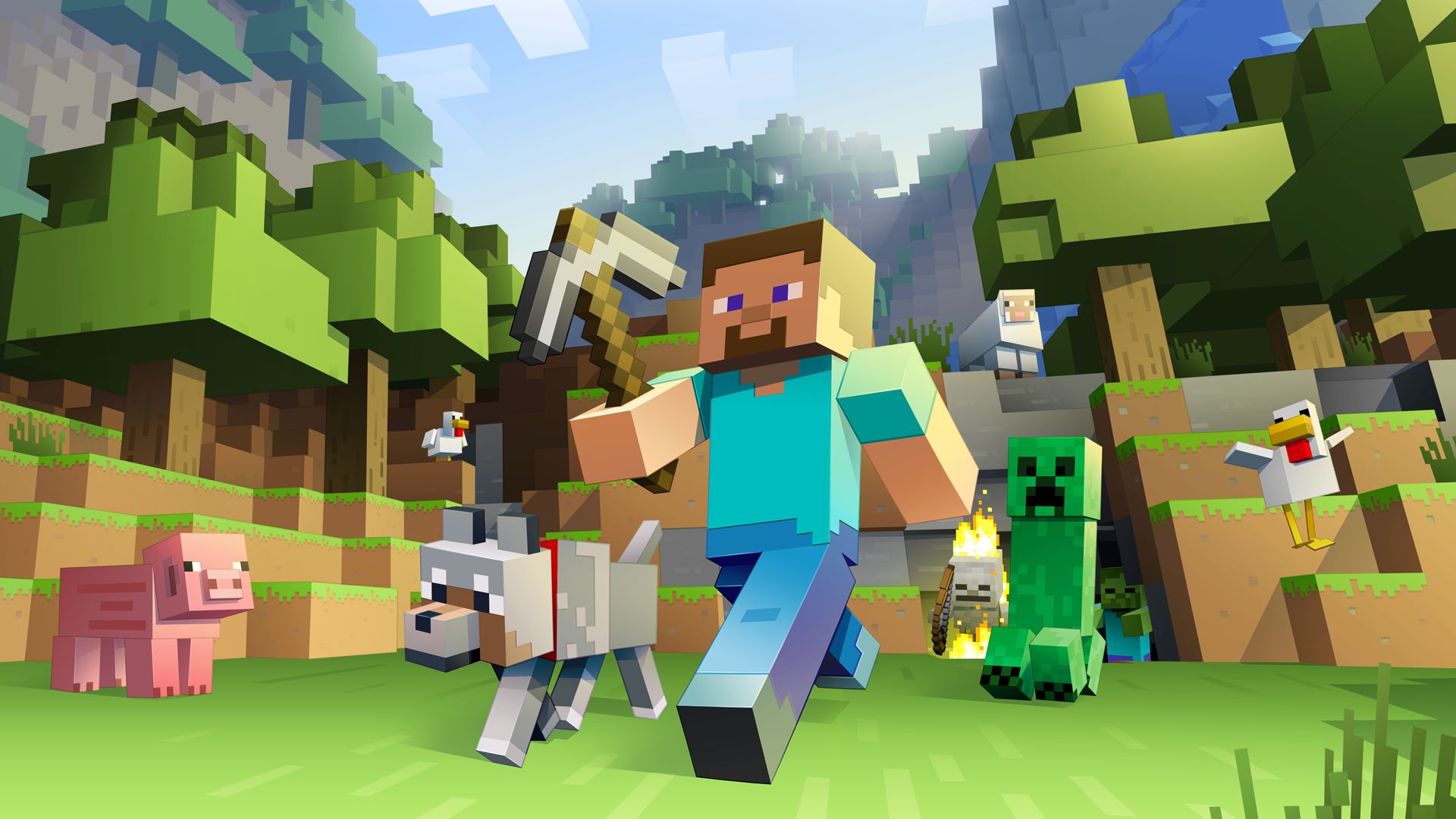
Video games aren't reality. Oftentimes, they don't even come close to reflecting realism, especially in the environment. Objects and animals, once harvested or killed, magically respawn after a set amount of time. Players are free to exploit and kill without restraint.
Minecraft, the popular block-based computer game, is a fine example. When a player starts a new game, the first thing he or she must do is gather wood. "Four trees' worth of wood," according to the Gamepedia Beginner's Guide to Minecraft.
This is a problem: the very first thing players must do in order to survive is to inflict deforestation, sometimes on a massive scale, on a pristine environment. Players are free to devastate the world in a multitude of ways: strip mining, mass deforestation, factory farming, and building enormous monuments. But that isn't all.
The consequences of burning forests, murdering animals, and building unnatural structures? Absolutely none. Tear down the structure, and the grass will grow over the barren dirt again. Plant some saplings and they will grow, given enough sunlight. If you have only two animals left, they can breed. If not, more will spawn.
Minecraft, though it allows for almost endless creativity, has a dark side. It teaches children that resources are infinite, that the difference between cutting down a tree and burning entire forests is negligible at most. More coal, gold and diamonds can be found a few miles away. When all the resources have been mined out of the current residence, it's time to move and exploit some other place.
It's this mentality that put our Earth into such peril. And it's this mentality that needs to be addressed, even in video games such as Minecraft.

No comments:
Post a Comment